Table of Contents
ToggleImagine biting into a crisp, tangy pickle that dances on your taste buds and transports you to a summer picnic. Pickling vegetables isn’t just a way to preserve food; it’s an art form that turns ordinary veggies into zesty delights. Whether you’re a seasoned chef or a kitchen novice, this flavorful craft can add a punch to your meals and impress your friends.
With just a few simple ingredients and a dash of creativity, anyone can transform cucumbers, carrots, and even beets into delicious pickled wonders. Plus, it’s a fun way to experiment with flavors and textures. Who knew that a jar of brine could hold so much potential? Join the pickling revolution and discover how this age-old technique can elevate your culinary game while keeping your fridge stocked with vibrant, tasty treats.
What Is Pickling Vegetables?
Pickling vegetables refers to a preservation method involving soaking vegetables in a brine solution. This solution typically contains vinegar, salt, and sometimes sugar, which helps to create a tangy flavor profile. The process not only extends shelf life but also provides a unique taste experience.
Cucumbers, carrots, and beets serve as popular options for pickling. Each variety introduces its own character to the pickle, allowing for a diverse range of flavors and textures. Fermented pickles, created through natural bacteria, present an alternative to vinegar-based methods, emphasizing probiotics and health benefits.
The pickling process begins with the preparation of the vegetables. Common techniques include slicing, chopping, or leaving vegetables whole. Each approach can influence the final outcome, allowing for customization based on personal preference.
Next, the brine mixture comes into play. Ingredients like garlic, dill, or spices often enhance the base flavor, creating a more complex profile. Allowing the vegetables to soak in brine for a specified duration determines the intensity of the flavor, ranging from a few hours to several weeks.
Ultimately, the appeal of pickling lies in its versatility. Home cooks enjoy crafting their own recipes, experimenting with combinations of vegetables and seasonings. Whether served as a side dish, condiment, or snack, pickled vegetables add excitement to any meal.
Benefits of Pickling Vegetables
Pickling vegetables offers numerous benefits, enhancing both the culinary experience and the nutritional profile of food. This technique preserves flavors and textures while contributing to health.
Preservation of Nutrients
Pickling retains vital nutrients in vegetables, ensuring their availability for consumption. Nutrients like vitamin C, folate, and various antioxidants remain intact during the process. Quick pickling methods can enhance nutrient preservation by minimizing exposure to heat and light. As a result, these vegetables maintain their health benefits even after preservation. Research indicates that well-pickled vegetables can still deliver nutritional perks similar to fresh options.
Extended Shelf Life
Extended shelf life is a significant advantage of pickling vegetables. The acidic environment created by vinegar or fermentation inhibits the growth of harmful bacteria. This preservation method can prolong the lifespan of vegetables for months or even years in appropriate conditions. Essential for food storage, pickling reduces food waste and enables individuals to enjoy seasonal produce year-round. By adding pickled vegetables to diets, people can keep nutritious, flavorful options available without frequent trips to the grocery store.
Common Types of Vegetables for Pickling
Various vegetables make excellent candidates for pickling, each bringing distinct flavors and textures to the final product.
Cucumbers
Cucumbers stand out as a classic pickling option. They can take on diverse flavors depending on the brine used. Whole cucumbers or sliced varieties both work well, creating crunchy snacks or tangy sandwich toppings. Dill pickles, sweet pickles, and bread-and-butter style all showcase different flavor profiles. A quick pickling method enhances their crispness while retaining essential nutrients. To boost the taste, adding garlic, dill, or chili flakes to the brine elevates the overall experience.
Carrots
Carrots offer a colorful and nutritious pickling option. Their natural sweetness complements the tangy brine, creating a delightful contrast. Sliced or whole baby carrots pickle beautifully, making them visually appealing in jars. Using a vinegar solution with spices such as coriander and mustard seeds intensifies their flavor. Carrot sticks make excellent additions to salads or snacks when pickled. The quick pickling method preserves the crunchiness while providing added probiotics for gut health.
Peppers
Peppers, ranging from bell to jalapeño, enhance the variety in pickled vegetables. Their vibrant colors add visual appeal to any jar. As pickled peppers soak in the brine, they develop a unique flavor that balances heat and tang. Sliced or chopped peppers work wonderfully in sandwiches, salads, or as toppings. Including herbs like oregano and spices like cumin can enhance their overall taste. Additionally, pickling helps preserve the peppers’ nutritional value, offering delicious options year-round.
Essential Ingredients for Pickling
For successful pickling, specific ingredients play a crucial role in achieving flavor and preservation. Utilizing the right components ensures vegetables maintain vibrant taste and texture.
Vinegar Varieties
Vinegar acts as the primary acid in pickling solutions. Common choices include white vinegar, apple cider vinegar, and rice vinegar. Each type contributes distinct flavors. White vinegar serves as a neutral option, while apple cider vinegar adds a fruity note. Rice vinegar provides a milder taste, ideal for sweeter pickles. Selecting the right vinegar can enhance the overall profile of pickled vegetables.
Spices and Seasonings
Spices and seasonings elevate the taste of pickled vegetables. Popular options, like dill, mustard seeds, and black peppercorns, add complexity. Dill infuses a fresh, herby essence that complements pickles well. Mustard seeds impart a slight heat, while black peppercorns introduce depth to the flavor. Experimenting with these ingredients allows for a customized approach, tailoring results to individual preferences.
Pickling Methods
Pickling methods fall into two main categories: quick pickling and fermented pickling. Each technique offers unique benefits and flavors.
Quick Pickling
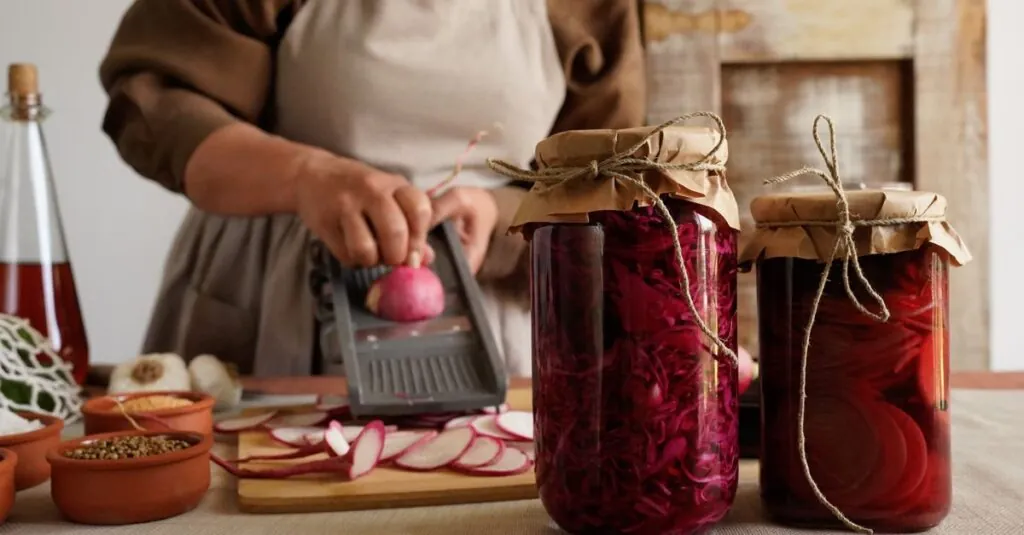
Quick pickling involves a speedy process that allows vegetables to stay crunchy and vibrant. This method requires immersing vegetables in a vinegar-based brine, which typically contains salt and sometimes sugar. For example, cucumbers or radishes can transform from fresh to tangy in just a few hours. Home cooks often customize the brine by adding spices like garlic or dill, enhancing the flavor profile. Ideal for those seeking instant gratification, quick pickling results in delicious, ready-to-eat snacks or condiments within a day.
Fermented Pickling
Fermented pickling utilizes natural fermentation processes to create unique, probiotic-rich delicacies. This method relies on beneficial bacteria to break down sugars in vegetables, resulting in a tangy and flavorful product. For instance, cabbage often becomes sauerkraut through fermentation, while cucumbers transition into traditional dill pickles. Patience plays a crucial role, as fermentation usually takes several days to weeks, depending on temperature and desired sourness. This technique not only preserves but also enhances nutritional value, adding live cultures beneficial for gut health.
Pickling vegetables opens up a world of flavor and creativity in the kitchen. By experimenting with different vegetables and brine recipes, anyone can elevate their meals while preserving seasonal produce. The versatility of pickling allows for both quick and fermented methods, catering to various tastes and preferences.
Not only does pickling enhance the taste and texture of vegetables, but it also provides nutritional benefits, ensuring that essential vitamins and antioxidants remain intact. With a little practice, home cooks can enjoy vibrant, tangy treats that add excitement to any dish. Embracing the art of pickling is a rewarding journey that transforms ordinary ingredients into extraordinary culinary experiences.