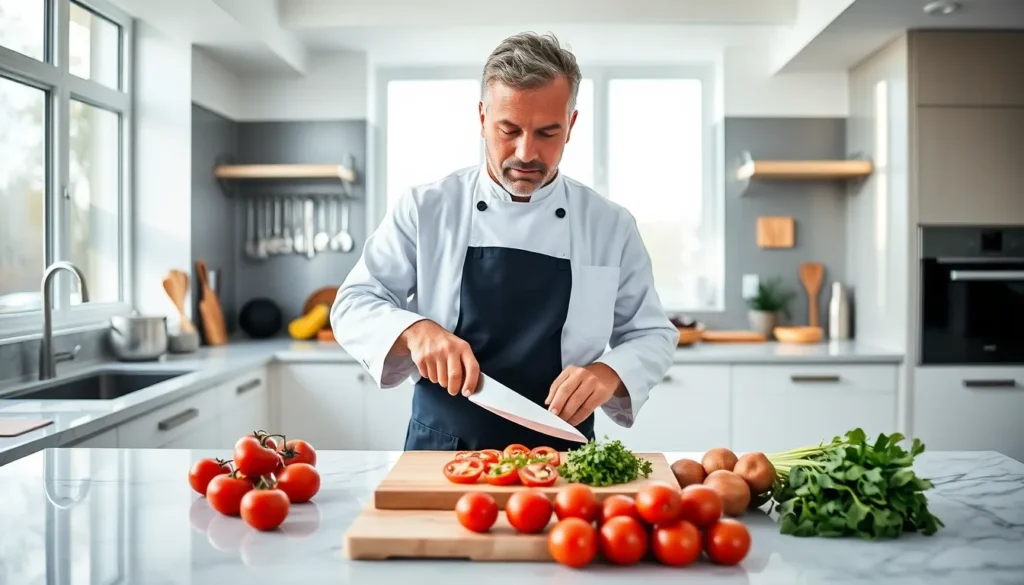
Knife skills can make or break a dish. They can transform your cooking from amateur to pro with just a flick of the wrist (or a firm grip, if that’s your style). Imagine dicing an onion in no time or slicing a tomato without squishing it to oblivion. With the right techniques at your fingertips, you’ll be poised to impress anyone at your dinner table, or even just yourself. So grab your favorite knife, and let’s slice, chop, and mince our way to culinary greatness with these essential knife techniques.
Essential Knife Skills Every Cook Should Master
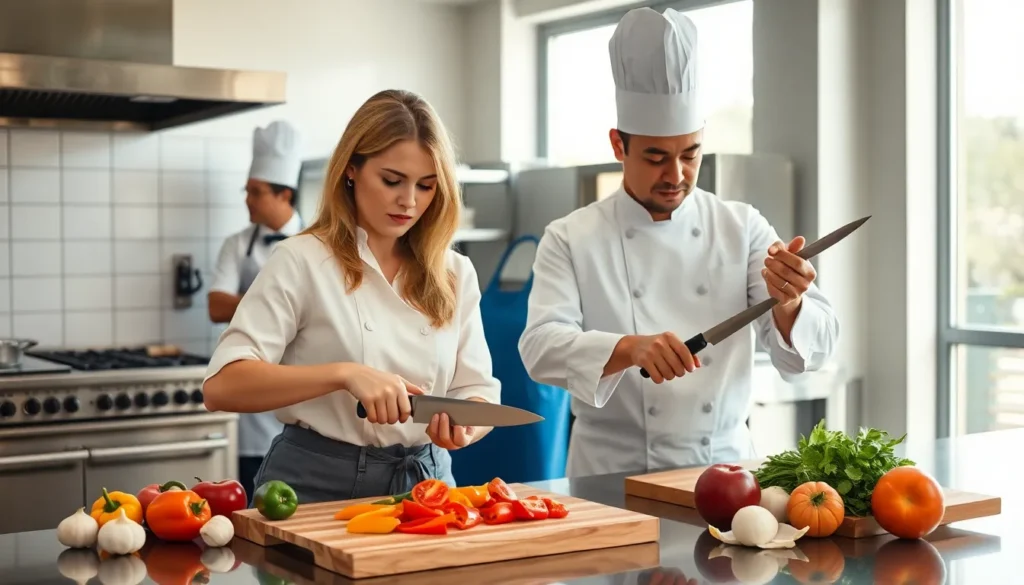
Learning knife skills is crucial for any aspiring chef. Mastering the foundation allows cooks to work confidently and efficiently in the kitchen.
The Grip
The way one holds the knife can either enhance or hinder one’s abilities. A proper grip involves holding the handle firmly with three fingers while resting the index finger on the blade’s side for control, and using the thumb for balance. This grip allows for better maneuverability and precision.
The Rocking Motion
Utilizing a rocking motion can create smoother cuts, especially with vegetables like garlic and herbs. By anchoring the knife’s tip on the cutting board and rocking downward and upward using the heel, one can achieve even, consistent cuts.
Understanding the Pressure
Applying the right amount of pressure is key. Too much force can lead to uneven cuts or damage to the ingredient, while too little can slow the process dramatically. Practicing gently at first helps one adjust to the right touch.
Practice Makes Perfect
Endless practice with different types of cuts enables cooks to refine their skills and build confidence. Regularly dedicating time to practice can lead to impressive results.
Types of Knives and Their Uses
Diving into the world of knives can feel overwhelming. Understanding the types and their uses demystifies this essential kitchen tool.
Chef’s Knife
The chef’s knife is the versatile workhorse in any kitchen. Measuring 6 to 12 inches long, it handles everything from dicing vegetables to slicing meat. A chef’s knife is a must-have for any serious cook.
Paring Knife
For more delicate tasks, the paring knife shines. Typically around 3 to 4 inches in length, it’s perfect for peeling fruits, deveining shrimp, or making delicate cuts.
Serrated Knife
A serrated knife, often referred to as a bread knife, is designed for slicing through crusty bread and delicate pastries. The teeth of the blade grip the surface, ensuring a clean cut without tearing the interior.
Boning Knife
With its narrow, flexible blade, the boning knife excels at removing bones from meat and fish. The flexibility allows cooks to maneuver easily around joints and avoid cutting through unwanted parts.
Basic Knife Cuts and Techniques
To elevate culinary presentations, mastering basic cuts is essential. Let’s break down some fundamental techniques every cook should incorporate into their repertoire.
Julienne
This cut transforms vegetables into matchstick-sized pieces, ideal for stir-fries and salads. To julienne, start by slicing the vegetable into planks, then into thin strips.
Dice
Dicing involves cutting ingredients into uniform cubes. Begin with a julienne cut, then rotate the stacks and cut crosswise to achieve evenly-sized pieces. This technique ensures even cooking and aesthetic appeal.
Chiffonade
A fancy term for slicing herbs or leafy greens into thin ribbons, chiffonade adds a delicate touch to dishes. Stack the leaves, roll them tightly, and slice crosswise: voila, you’re a pro.
Mincing
Mincing is all about tiny, finely chopped pieces, perfect for garlic or ginger. Rock the knife back and forth steadily over the ingredient, adjusting your pressure as necessary to achieve the desired size.
Advanced Knife Techniques for Experienced Cooks
After mastering the basics, adventurous cooks might want to challenge themselves with some advanced techniques that add flair to their culinary skillset.
Tourne
The tourné technique creates elegant, football-shaped vegetables, often used as a garnish. The process requires skill and precision, showcasing a cook’s dedication to presentation.
Batonnet
Batonnet takes the concept of julienne to the next level. It involves creating thicker strips, often used for frying or roasting. This cut also serves as the base for other cuts, making it essential for culinary creativity.
Fine Brunoise
This cut is an evolution of dicing into very small, uniform cubes, typically 1-2 mm in size. It’s perfect for incorporating into sauces, soups, or as a refined garnish. Achieving fine brunoise requires patience but adds a sophisticated touch to any dish.
Safety Tips for Using Kitchen Knives
While sharp knives are essential, safety must be a top priority. Here are a few crucial safety tips to ensure that everyone stays safe in the kitchen.
Keep Knives Sharp
Dull knives require more force, increasing the risk of accidental slips and cuts. Regularly sharpen knives to maintain their effectiveness and reduce the risk of injury.
Use a Cutting Board
Always use a cutting board to stabilize the item being cut. This prevents slipping and allows for safer slicing.
Cut Away from the Body
When slicing, always cut away from the body. This simple rule minimizes the chances of a mishap occurring near vital areas.
Store Knives Properly
Storing knives safely creates a safer workspace. Using a blade guard or magnetic strip prevents accidental cuts when reaching for a knife.
Maintenance and Care for Your Knives
Knives are an investment, and maintaining them is crucial for longevity and performance. Here’s how to keep them in top shape.
Cleaning
Rinse knives immediately after use and avoid leaving them in a sink full of suds, as this can lead to damage. Hand washing with mild soap and water is the best approach.
Sharpening
Regular honing should be part of a knife’s routine care. Using a whetstone or honing rod can maintain the blade’s edge effectively.
Storage
Proper storage is key to avoiding damage. Knives can be stored in a knife block, on a magnetic strip, or safely wrapped in guards to prevent dulling or accidental cuts.